
Retired Flight Attendants Over 60 Share 7 Things They Wish They'd Known About Their Legs Sooner
They spent thirty years walking the aisle without swollen ankles. Now they fly as passengers, and their legs tell a different story. Here’s what they wish someone had told them sooner.

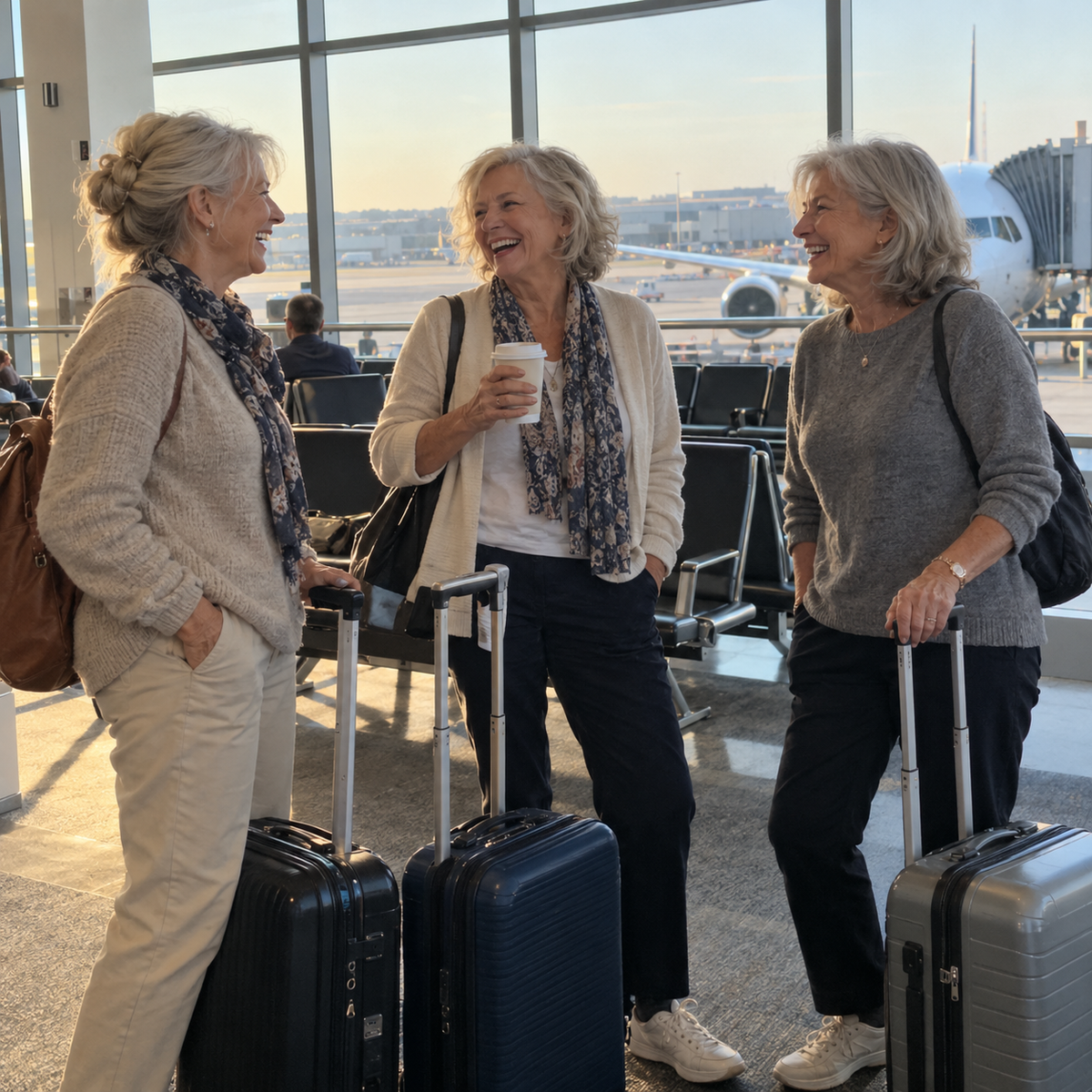
For thirty years they walked the aisle. Long hauls to London, Sydney, Tokyo. Twelve hour days on their feet. Pushing carts, kneeling beside passengers, standing in the galley at 3am.
Their ankles almost never swelled.
Then they retired. And the first time many of them flew as a passenger, to see a grandchild or visit a sister, they looked down somewhere over the ocean and barely recognized their own feet. Puffy. Tight. Shoes that slipped on easily at the gate and had to be forced back on at landing.
Same planes. Same routes. Same legs, just older. So what changed?
Here are 7 things retired flight attendants over 60 wish someone had told them sooner. If you're over 50 and you fly to see family, every one of them applies to you too.
1. That sitting is harder on your legs than working the cabin
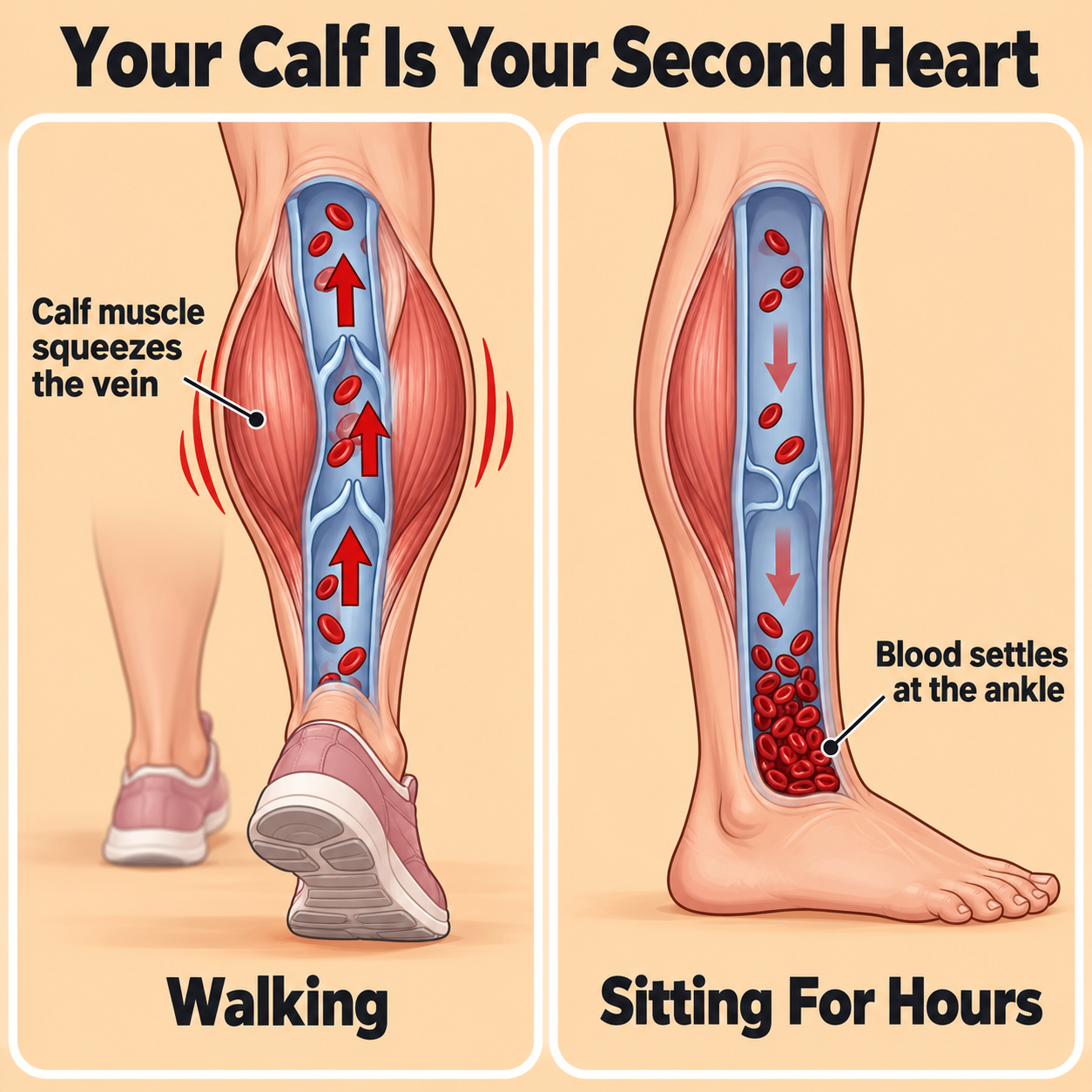
Your calf muscles are your body's second heart. Every step squeezes the deep veins in your lower legs and pushes blood back up toward your heart.
For thirty years, the job kept that pump running. Up the aisle, down the aisle, thousands of steps a flight. Without ever knowing it, they were protecting their legs every time they went to work.
As passengers, they sit. Four hours. Eight hours. Fourteen. The pump goes quiet, and blood that should be climbing back up starts to settle in the ankles.
The hardest job on the plane was never what hurt their legs. The seat was.
Every 30 minutes, point the toes up and down 15 times, then roll the ankles in slow circles. Walk the aisle whenever the seatbelt sign is off. It wakes the pump up for a few minutes. The rest of the flight, the legs need help.
2. That the swelling after 50 was never just tiredness
Most of them blamed it on their last few years of flying. Long trips. Getting older. Too much salt. Heavy legs by evening became normal, and normal stopped feeling worth mentioning.
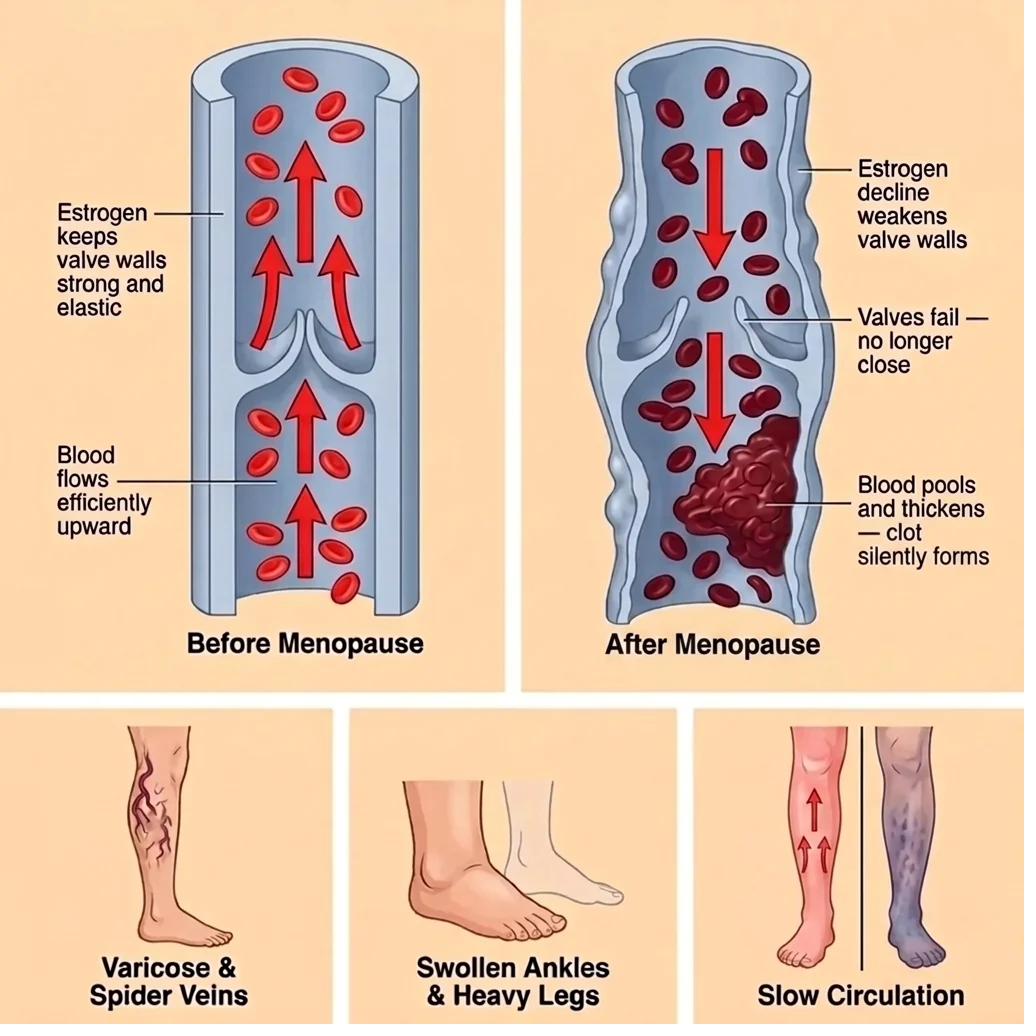
What nobody explained: inside the veins of your legs are tiny one way valves. They open to let blood climb toward your heart, then close so it can't slide back down. Estrogen helped keep those vein walls flexible.
After menopause, as estrogen falls, the walls stiffen and the valves seal a little less tightly. Blood slows down and starts to pool in the lower legs. Quietly. In women with clean bloodwork and normal checkups.
It wasn't tiredness. It was their veins working harder than they used to. And a long flight puts them under far more pressure.
Legs that feel heavy by evening. Ankles that stay puffy longer after a long day. Small veins showing up on your calves that weren't there a few years ago. A dull ache behind the knee. These aren't just signs of getting older. They're signs your circulation is already working harder.
3. That the cabin was working against their legs the whole time
Flight attendants know the cabin better than anyone. They just never thought of it as something that could hurt them.
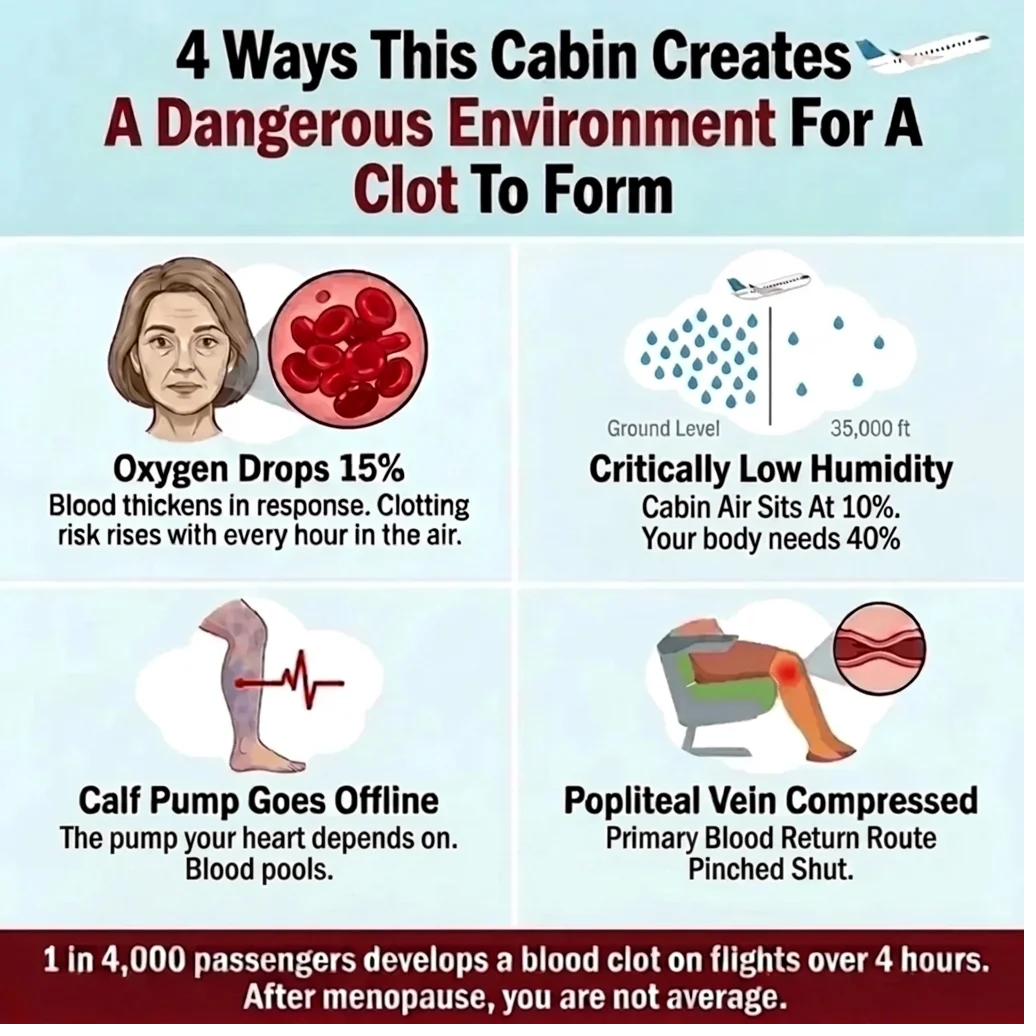
Cabin humidity often sits between 10 and 20 percent, drier than most deserts. The cabin is pressurized to roughly the air at 8,000 feet. You lose water without feeling thirsty, and as you do, your blood gets thicker.
On the job, they were sipping water all flight between service runs. As passengers, they doze off, skip the drink cart, and have a glass of wine with dinner.
Now they sip a glass of water every hour, whether they're thirsty or not, and go easy on alcohol and extra coffee.
But water can't move blood that has stopped moving. Hydration is only half of it.
4. That crossing their legs made it worse
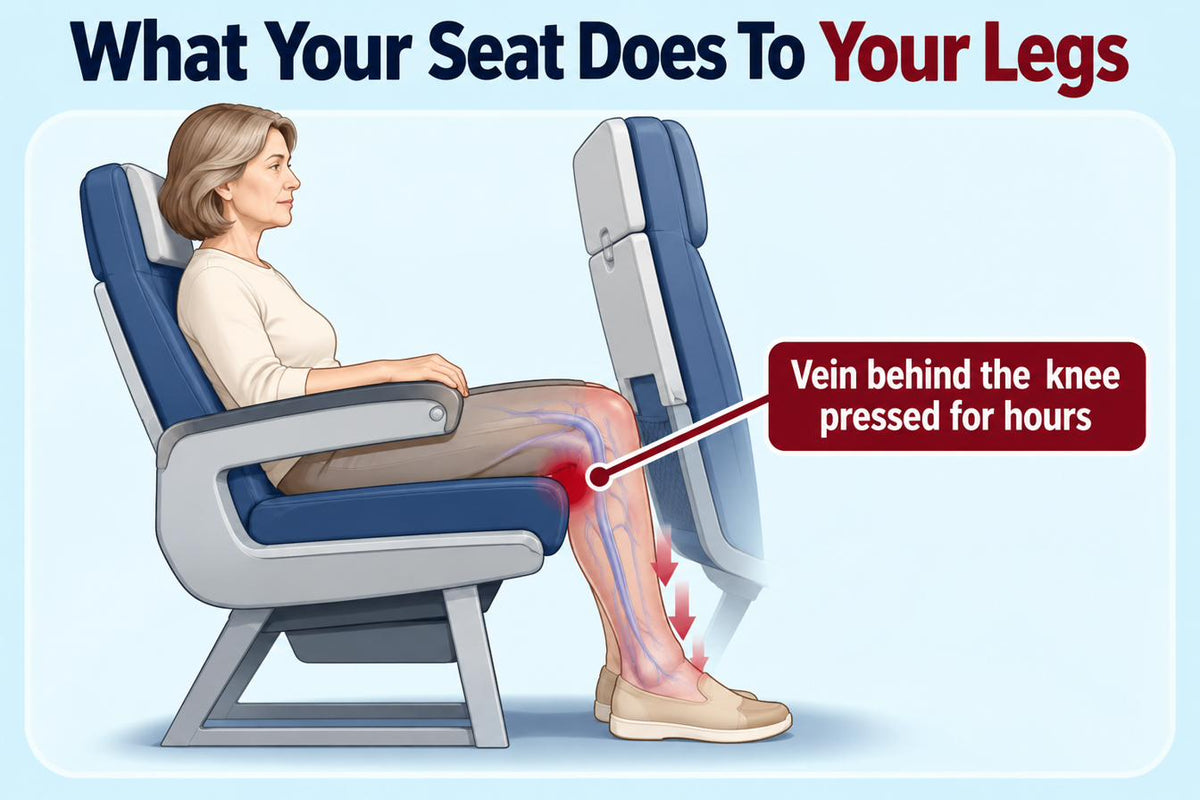
It's the most natural way to sit. Settle in, cross one leg over the other, open a book.
But an economy seat already bends your knees at close to a right angle, pressing on the vein that runs behind your knee. That vein is one of the main roads blood takes out of your lower leg. Crossing your legs presses on it even harder, for hours.
Now they sit with both feet flat, stretch their legs out whenever they can, and keep their bag out of their foot space so they have room to do it.
5. That the dangerous moment isn't the flight. It's standing up after
For thirty years, they were the ones standing at the door saying goodbye as passengers filed off. Most of them never thought about what happens in the minutes after.
When blood sits still in the deep veins of your calf for hours, it can clump into a clot. Doctors call it deep vein thrombosis, and often there's no pain and nothing you can see.
When you stand up, your calves squeeze hard for the first time in hours. A clot that formed while you sat can break loose and travel to the lungs. That's a pulmonary embolism, and it's a medical emergency. It can happen in the aisle, on the jet bridge, or days after you're home.
The World Health Organization's research on air travel found the risk of a blood clot roughly doubles on flights longer than four hours. And over 100,000 Americans die from pulmonary embolism every year. That's more than breast cancer.
Pain or swelling in one leg, warmth or redness in the calf, sudden shortness of breath, or chest pain, on the flight or in the days after. If you notice any of them, get medical help right away.
6. That pharmacy compression socks were never going to work
Plenty of them tried. After the first bad flight, they did the sensible thing and bought a pair at the pharmacy.
Thick synthetic nylon. Hot within an hour. A band that dug in as their legs warmed up and left a red ring by the time the meal came. Halfway through the flight they were in the bathroom peeling them off, and the pair spent the rest of the trip balled up in the carry on.
Most of them assumed the problem was them. Their legs. Their age. Their patience.
It wasn't. Those socks were built for a hospital bed, not a fourteen hour flight. A sock you take off at hour two protects you for two hours.
The only compression that works is the pair you forget you're wearing.
7. The sock the younger crew swear by
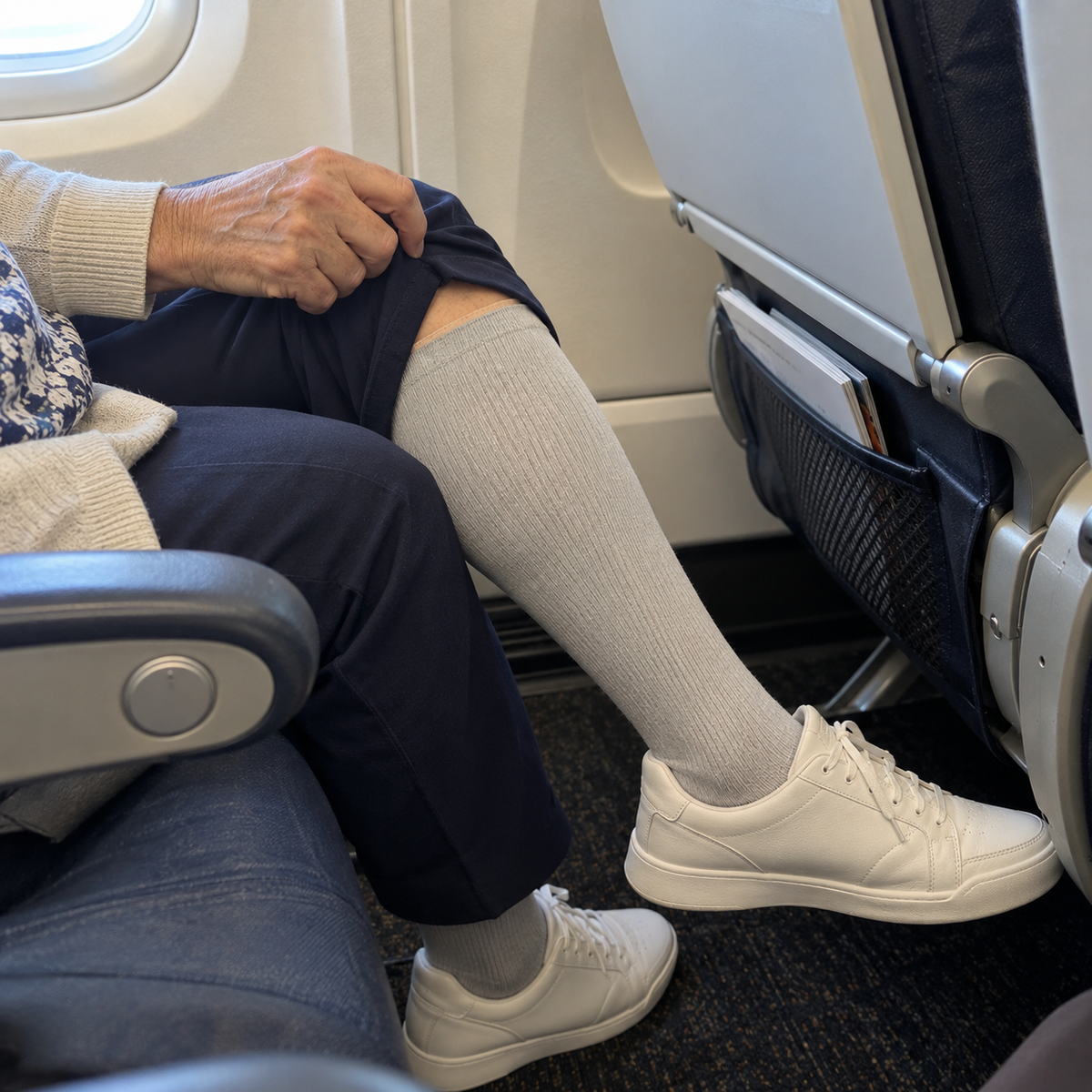
When they finally asked the crew still flying, the women they used to work beside, the answer was the same. The younger ones don't fly without compression anymore. Not the pharmacy kind. A soft bamboo pair they put on at home and don't take off until they're at the hotel.
Graduated compression keeps pushing blood up from the ankle every minute you sit, whether you're moving or asleep. A Cochrane review of airline passenger studies found people who wore compression stockings on long flights had far fewer silent clots than people who didn't.
Thirty years in the air, and the thing that would have helped most was something they'd never worn.
That pair is Evina.


Each sock uses graduated compression rated at 15 to 20 mmHg, the range most often recommended for long flights. The pressure is firmest at the ankle, where blood pools first, and eases off step by step as the sock moves up the calf. That steady squeeze keeps pushing blood upward the whole time you sit, doing the job your calf muscle does when you walk, even while you're completely still.
- Graduated compression from ankle to calf that works whether you're moving or sitting still.
- Cushioned heel and ball of the foot for the long walk through the terminal and every step off the jet bridge.
- Soft bamboo blend that stays comfortable for a full travel day.
- 28 micro massage points woven into the knit.
- Non pinch top band. Holds in place without cutting into your calf or leaving a red ring by hour four.
- Multiple sizes, including room for wider calves, so the compression fits real legs instead of one size for everyone.

Shoes that fit the same when you land as when you boarded. No deep line pressed into your calf hours later. No shuffling to baggage claim on legs that feel like wet cement. You walk off the plane the way they used to after a full shift: like your legs never noticed the flight.
Women over 50 are already flying like the crew. Here’s what they’re saying


"Fourteen hours to see my son in Sydney, and for the first time I didn't spend day one of the visit with my feet up on his couch. My ankles looked the same when we landed as when I boarded. I'm wearing them on the flight home too."
"I used to land and immediately loosen my shoes before I could even think about walking through the airport. I wore Evina on our flight to Rome, and the difference was obvious when we arrived. My shoes still felt comfortable, my legs felt less heavy, and I wasn't desperate to sit down again after spending hours in a seat. They're now the first thing I pack."
"The compression socks I bought before always ended up rolled down or stuffed in my carry on halfway through the flight. They were hot, scratchy, and just too much work. Evina felt soft against my skin and stayed comfortable the whole trip. I actually kept them on through baggage claim and the ride to our hotel. That has never happened with my other pairs."
"I tried one pair on a flight to Vancouver and noticed the difference before I was even off the plane. No line pressed into my calf, no cement legs at baggage claim. I ordered the grey ones the day I got home so I'd have a fresh pair for every leg of my next trip."
They had to learn all of this after thirty years in the air. You just learned it before your next flight.
The only thing left to decide is whether you fly like the crew this time, starting with the one thing they wish they'd had sooner.

When this batch sells through, this offer closes and pricing goes back to normal. Pick your size, choose your bundle, and have your pair ready before your next flight.
This article is for informational purposes and is not medical advice. Compression socks are not a substitute for medical treatment. If you have a history of blood clots, circulation problems, diabetes, or peripheral artery disease, speak with your doctor before wearing compression.
© 2026 The Healthy Traveler Journal