
Airport Paramedic: Most Of My Jet Bridge Calls Start The Same Way. A Healthy Woman Over 50 Stands Up After A Long Flight
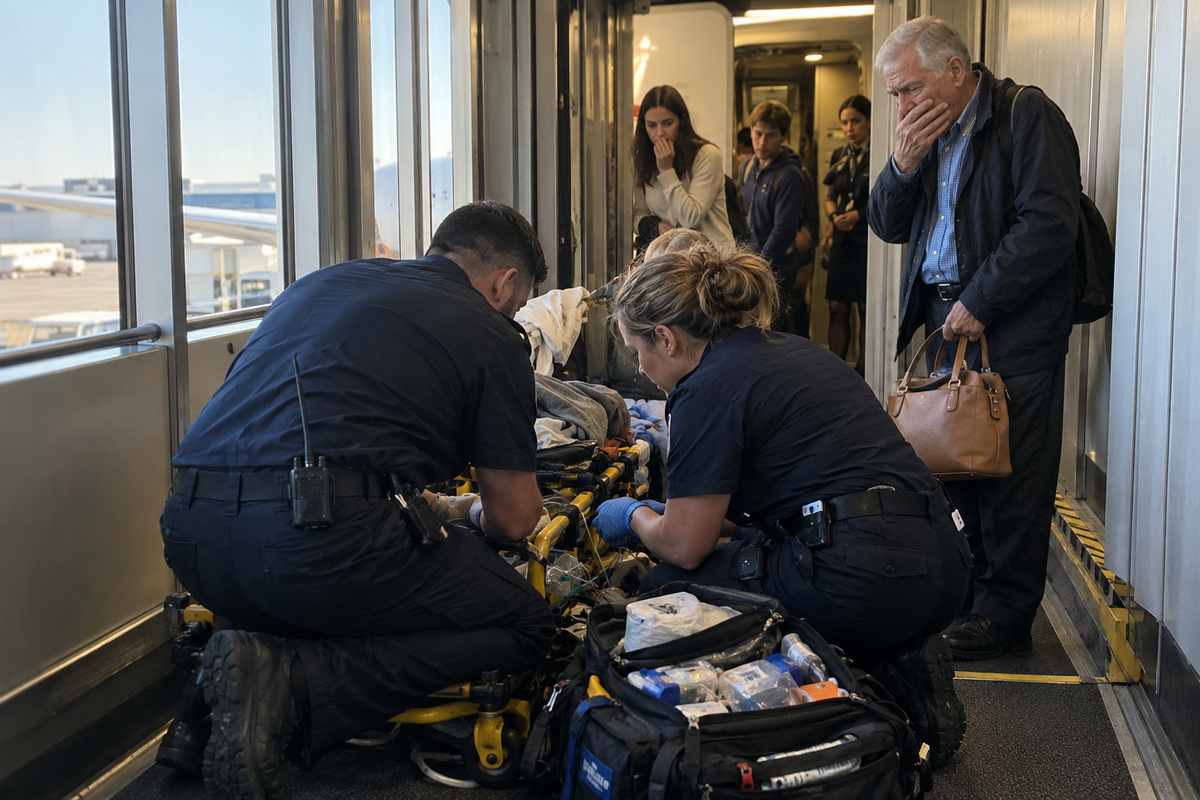
She stood up to get off the plane. That's when they called us.
If your ankles swell when you fly...
If your legs feel heavy for days after a long flight...
If you've been told it's just part of getting older...
Please read this before you fly again.
My name is Maria. I'm 54, and I've been a paramedic for 22 years. For the last eight, I've been stationed at one of the busiest airports in the country.
When someone collapses on a plane, on a jet bridge, or in a terminal, I'm the one they call.
The Call That Stays With Me
It came in at 6:40 on a Tuesday evening. A woman, 64, collapsed in the aisle while the plane was unloading.
She was flying home from her granddaughter's wedding. She'd danced at the reception. She'd walked every morning for years. Her doctor had cleared her to travel without a second thought.
The plane landed. She stood up, reached for her bag, took two steps, and went down.
Her husband was standing in the jet bridge holding her purse. "She was fine the whole flight," he kept saying. "She slept most of the way."
We worked on her right there on the jet bridge floor, then rushed her to the hospital. In my job, you don't always find out how the story ends. I never found out how hers did.
But I knew what had happened. A clot had formed in her leg while she sat still for hours. When she stood up, it broke loose and traveled to her lungs. A pulmonary embolism.
It's A Call I've Answered Too Many Times

She wasn't the first. Not even close. So many of my calls follow the same pattern: a healthy woman over 50, coming off a long flight, standing up for the first time in hours.
And when I talk to their families afterward, I hear the same things.
"Her ankles always swelled when she flew." "Her legs felt heavy, but she said it was just age." "Her doctor told her it was normal."
It isn't normal. Those are signs her veins were already struggling, long before she ever boarded.
What's Actually Happening In Your Legs
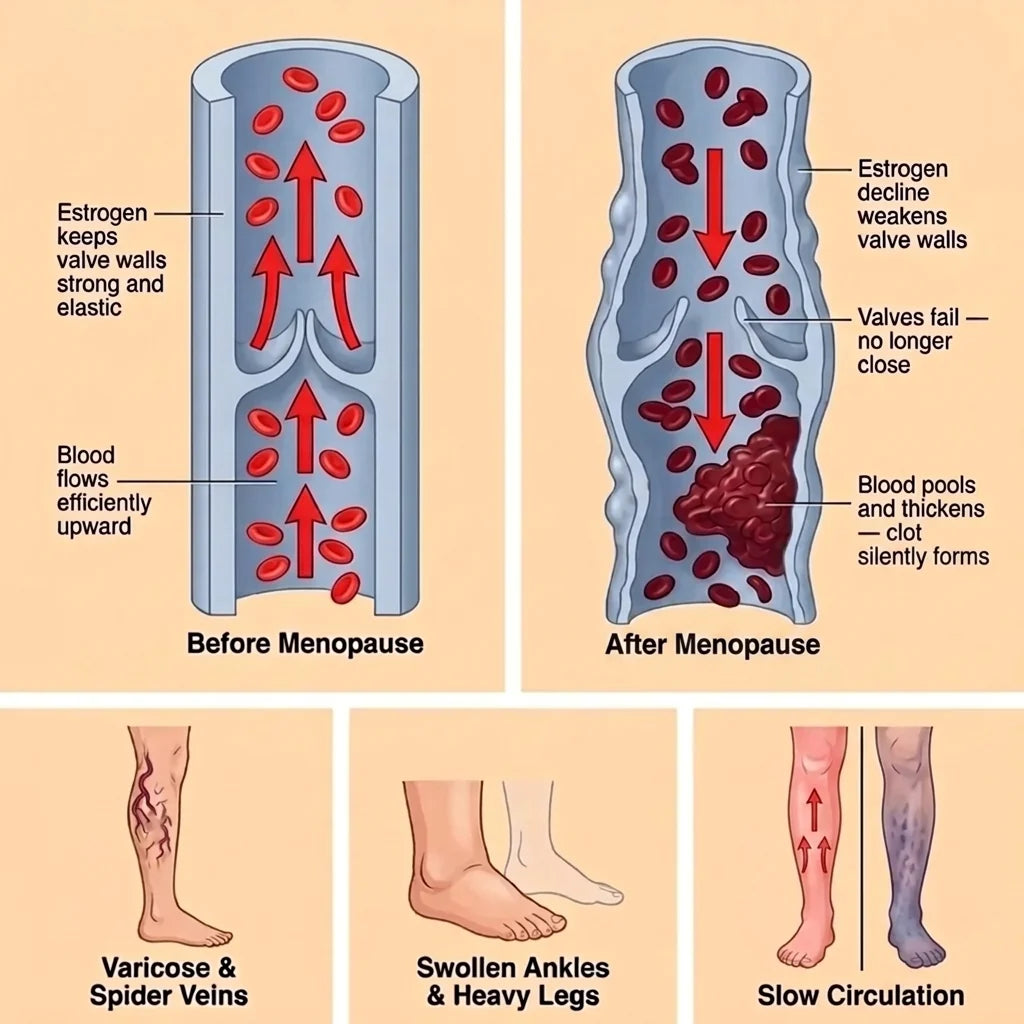
Inside the veins of your legs are tiny one way valves. With every heartbeat they open to let blood climb back toward your heart, then close so it can't slide back down. Estrogen helped keep those vein walls flexible.
After menopause, the walls stiffen and the valves seal a little less tightly. Blood slows down and starts to pool in the lower legs. Quietly. In women with clean bloodwork and normal checkups.
Flying doesn't create this problem. It speeds it up.
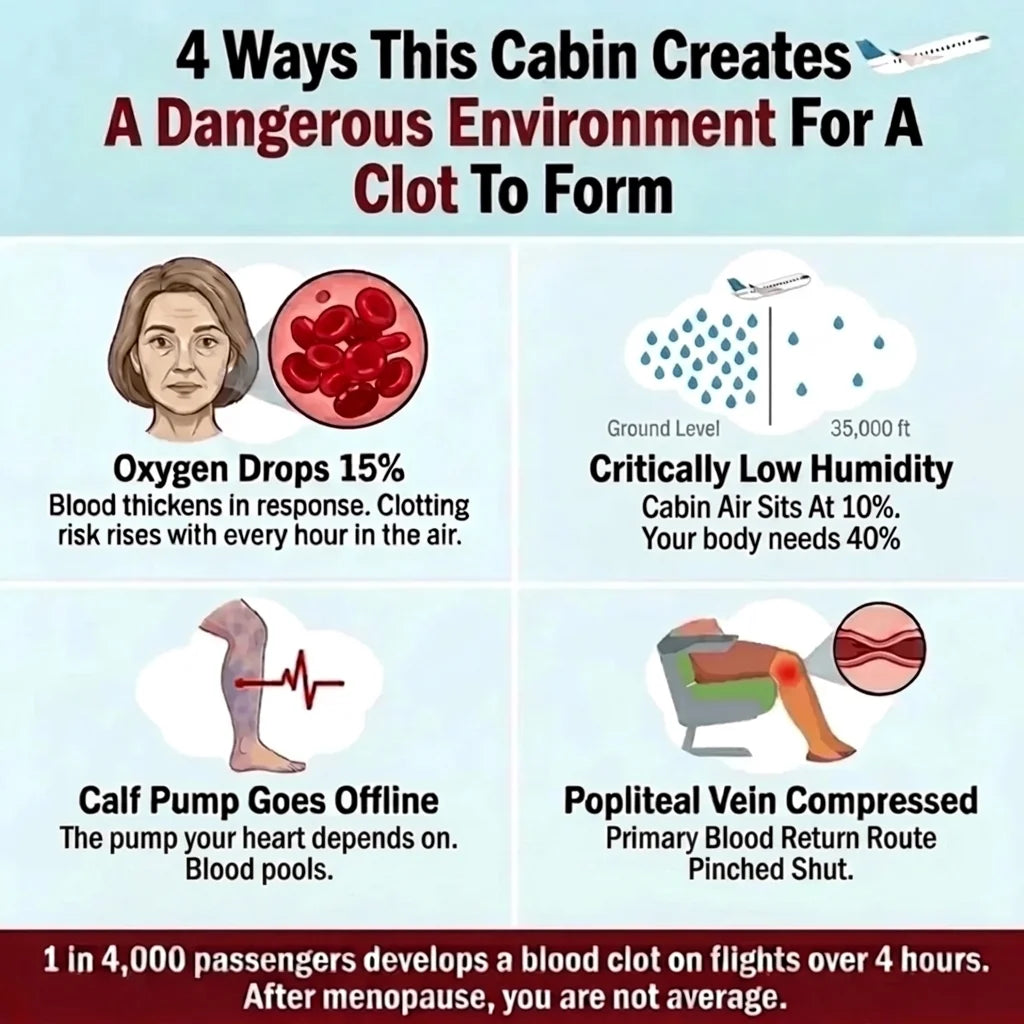
The cabin is pressurized to roughly the air at 8,000 feet. Humidity often sits between 10 and 20 percent, drier than most deserts, so you lose water without feeling thirsty and your blood gets thicker. Your calf muscles, the pump that pushes blood back up your legs with every step, go quiet the moment you sit down. And the seat presses on the vein behind your knee for hours.
When blood sits still in the deep veins of your calf, it can clump into a clot. Doctors call it deep vein thrombosis, and often there's no pain and nothing you can see. Then you stand up, your calves squeeze hard for the first time in hours, and that clot can break loose.
The World Health Organization's research on air travel found the risk of a blood clot roughly doubles on flights longer than four hours. And over 100,000 Americans die from pulmonary embolism every year. That's more than breast cancer.
Pain or swelling in one leg, warmth or redness in the calf, sudden shortness of breath, or chest pain, on the flight or in the days after. If you notice any of them, get medical help right away. Don't wait.
What People Are Told To Do, And Why It's Not Enough
- Drink more water. It helps a little with thick blood. It does nothing for a calf pump that's switched off.
- Walk the aisle. It works while you're walking. Sit back down and the pooling starts again within minutes. And when the seatbelt sign stays on, it doesn't happen at all.
- Put your feet up when you land. By then you've already spent hours with blood sitting in your lower legs.
- Pharmacy compression socks. The right idea, done badly. Thick, hot nylon that digs in harder as your legs warm up. Most women peel them off within two hours. A sock in your carry on protects nothing.
What I Noticed About The Flight Crews
Here's the thing about working at an airport: I see flight crews every single day.
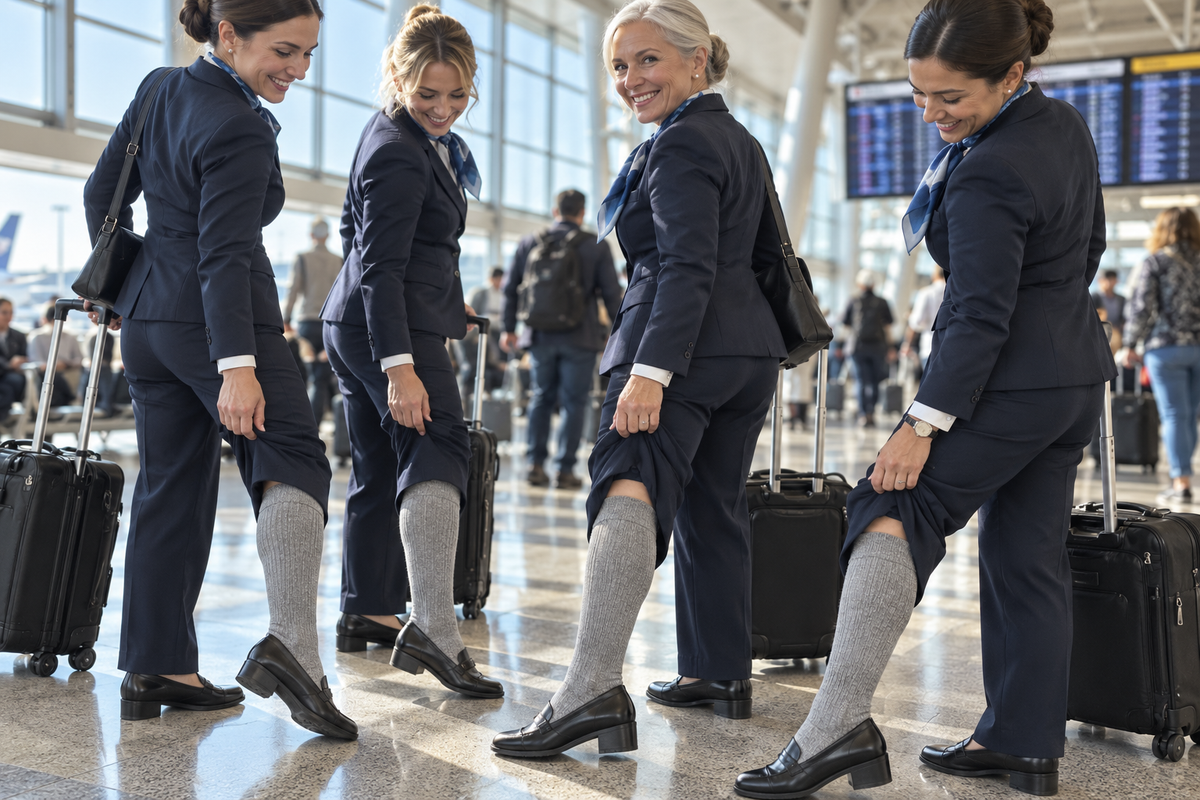
One evening, waiting at a gate after a call, I noticed something I'd walked past a thousand times. A crew coming off a twelve hour flight. Hours on their feet in that same dry cabin. And they walked up the jet bridge like they'd just started their day. No limping. No swollen ankles. One of them was older than me.
I asked her how. She smiled like she'd been asked before and lifted her trouser leg slightly.
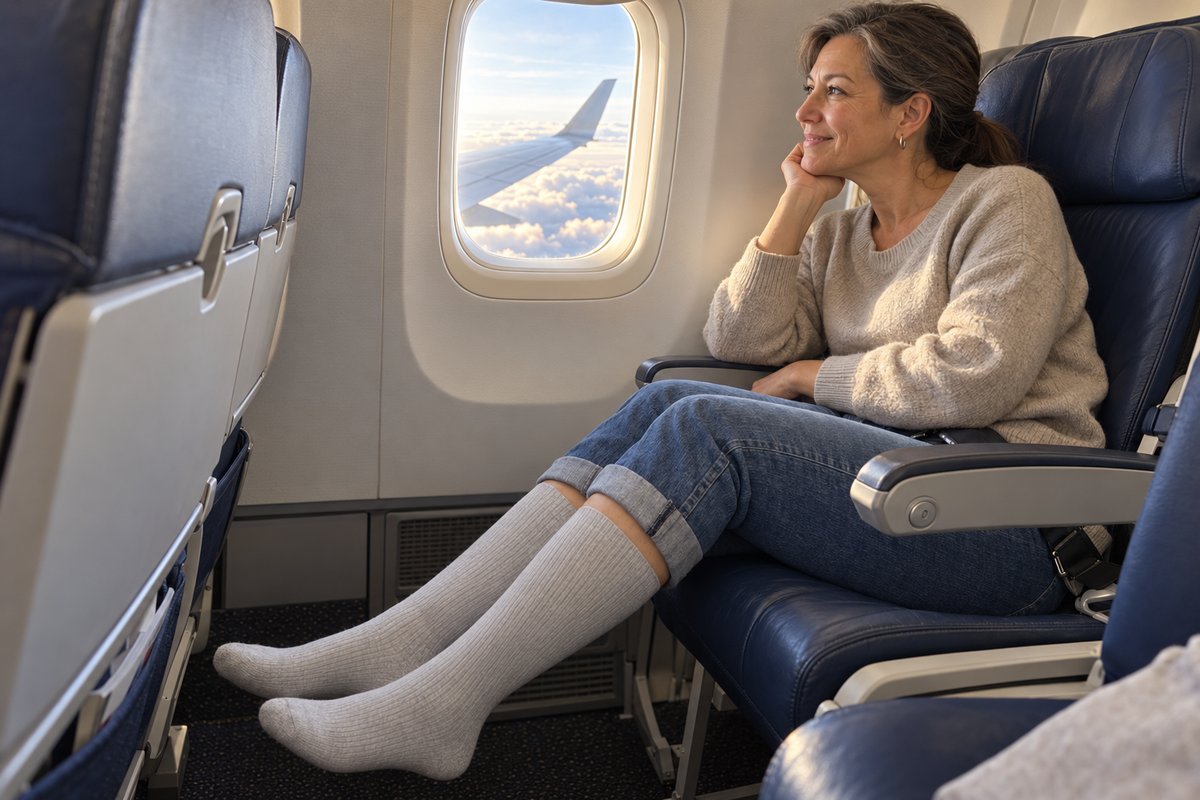
A soft grey knee high sock. Ribbed bamboo. Nothing like the thick beige stockings I see on patients.
"Half our crew wears them," she said. "Evina. It's a small brand. They sell out."
Why These Were Different
I looked them up that night. The difference was obvious once I saw it. Most people don't quit compression because compression doesn't work. They quit because the sock is unbearable.
- Graduated compression rated at 15 to 20 mmHg. Firmest at the ankle where blood pools first, easing off up the calf. It does the job your calf muscle would do if you were walking, while you sit completely still.
- Soft bamboo viscose that stays cool at altitude, so you don't overheat or itch.
- A non pinch top band that holds without leaving a red ring around your calf.
- Cushioned heel and ball of the foot for the long walk through the terminal.
- 28 micro massage points woven into the knit.
- Multiple sizes, including room for wider calves, so they fit real legs.
A Cochrane review of airline passenger studies found people who wore compression stockings on long flights had far fewer silent clots than people who didn't. But only if they actually stay on.
Apply 60% Discount And Buy Now →I Tried Them Myself
I'm on my feet for twelve hour shifts, and at 54 my own legs have started to feel it. So I ordered a pair.
They slid on without a fight. Soft and cool, nothing like the stiff ones I'd been bracing for. By hour ten of my next shift, I realized I hadn't thought about my legs once.
A month later, I flew five hours to see my son and his family. I put them on at home before I left. Same cramped seat. Same dry air. Same hours without moving.
When we landed, I stood up and walked up the jet bridge, the same kind I'd knelt on that spring, and my legs felt like my legs.
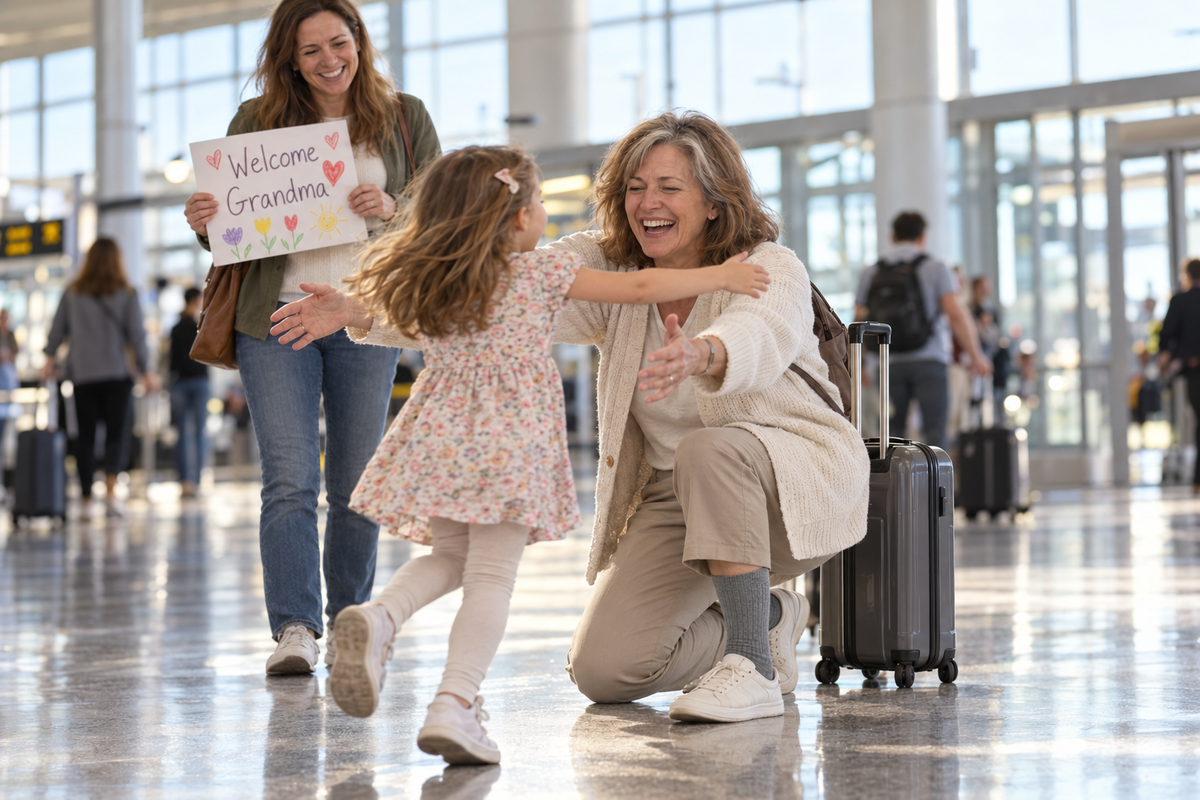
My granddaughter came running at me in arrivals with her mom right behind her holding a welcome sign, and I knelt down and caught her. No swollen ankles. No two days on the couch with my feet up.
I'd Rather You Never Meet Me On A Jet Bridge
I still think about that woman from the wedding. Her husband holding her purse. "She was fine the whole flight."
If you fly even once a year, if your ankles swell when you land, if you've been telling yourself it's just part of getting older, please don't ignore it.
These are the socks I wear now, and the ones I tell every woman I know who flies about. Because compression only helps while it's on your legs.
Right now, Evina is offering 60% off for readers of this article.
They make them in small batches, and when a batch sells through, the offer closes. If it's still showing when you click, I wouldn't wait.
Wear them on your next flight. If you're not completely happy, return them within 30 days for a full refund.
P.S. Since then, I've told every woman I know who flies, including half the women I work with. Here's what some of them, and other Evina customers, have said:
"Fourteen hours to see my son in Sydney, and for the first time I didn't spend day one of the visit with my feet up on his couch. My ankles looked the same when we landed as when I boarded. I'm wearing them on the flight home too."
"I used to land and immediately loosen my shoes before I could even think about walking through the airport. I wore Evina on our flight to Rome, and the difference was obvious when we arrived. My shoes still felt comfortable, my legs felt less heavy, and I wasn't desperate to sit down again after spending hours in a seat. They're now the first thing I pack."
"The compression socks I bought before always ended up rolled down or stuffed in my carry on halfway through the flight. They were hot, scratchy, and just too much work. Evina felt soft against my skin and stayed comfortable the whole trip. I actually kept them on through baggage claim and the ride to our hotel. That has never happened with my other pairs."
"My legs used to swell so badly after flying that I'd lose the first two days of every visit sitting with them up. This pouch lives in my carry on now. Last month I got off the plane and was on the floor building Lego with my granddaughter that same afternoon."
"I tried one pair on a flight to Vancouver and noticed the difference before I was even off the plane. No line pressed into my calf, no cement legs at baggage claim. I ordered the grey ones the day I got home so I'd have a fresh pair for every leg of my next trip."
Click the button above to see if Evina is still offering 60% off.
This is an advertisement and not an actual news article, blog, or consumer protection update.
The story above is a dramatization based on common experiences, and names and details are illustrative. This article is for informational purposes only and is not medical advice. Compression socks are not a substitute for medical care and are not proven to prevent blood clots on their own. If you have a history of blood clots, circulation problems, diabetes, or peripheral artery disease, talk to your doctor before wearing compression.
© 2026 The Healthy Traveler Journal